
Student Loan Balance Not Going Down: Why Your Student Loan Balance
Student Loan Balance Not Going Down: Why Your Student Loan Balance
By FirstStep Solutions Editorial Team · Updated 08-26-2026
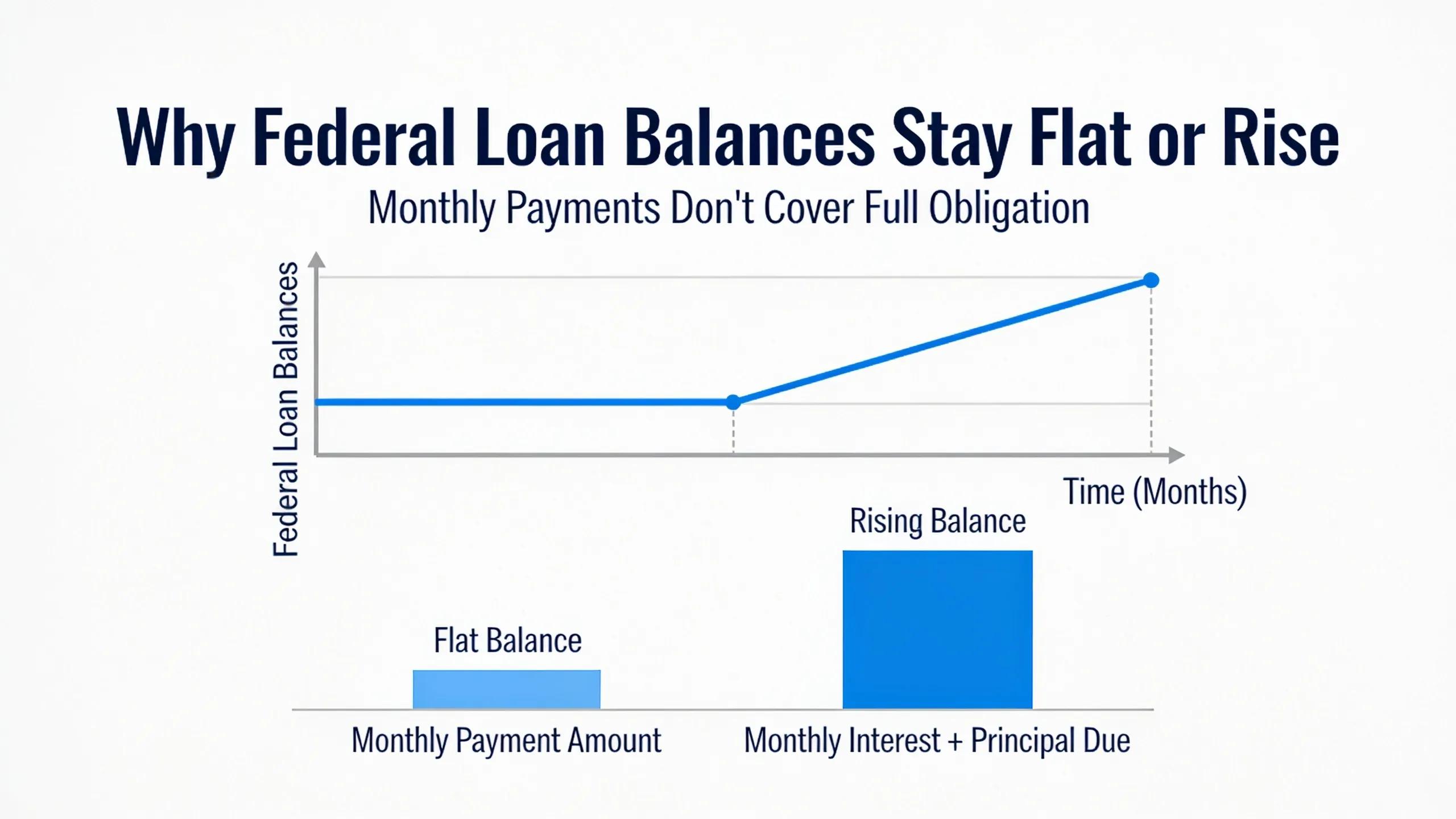
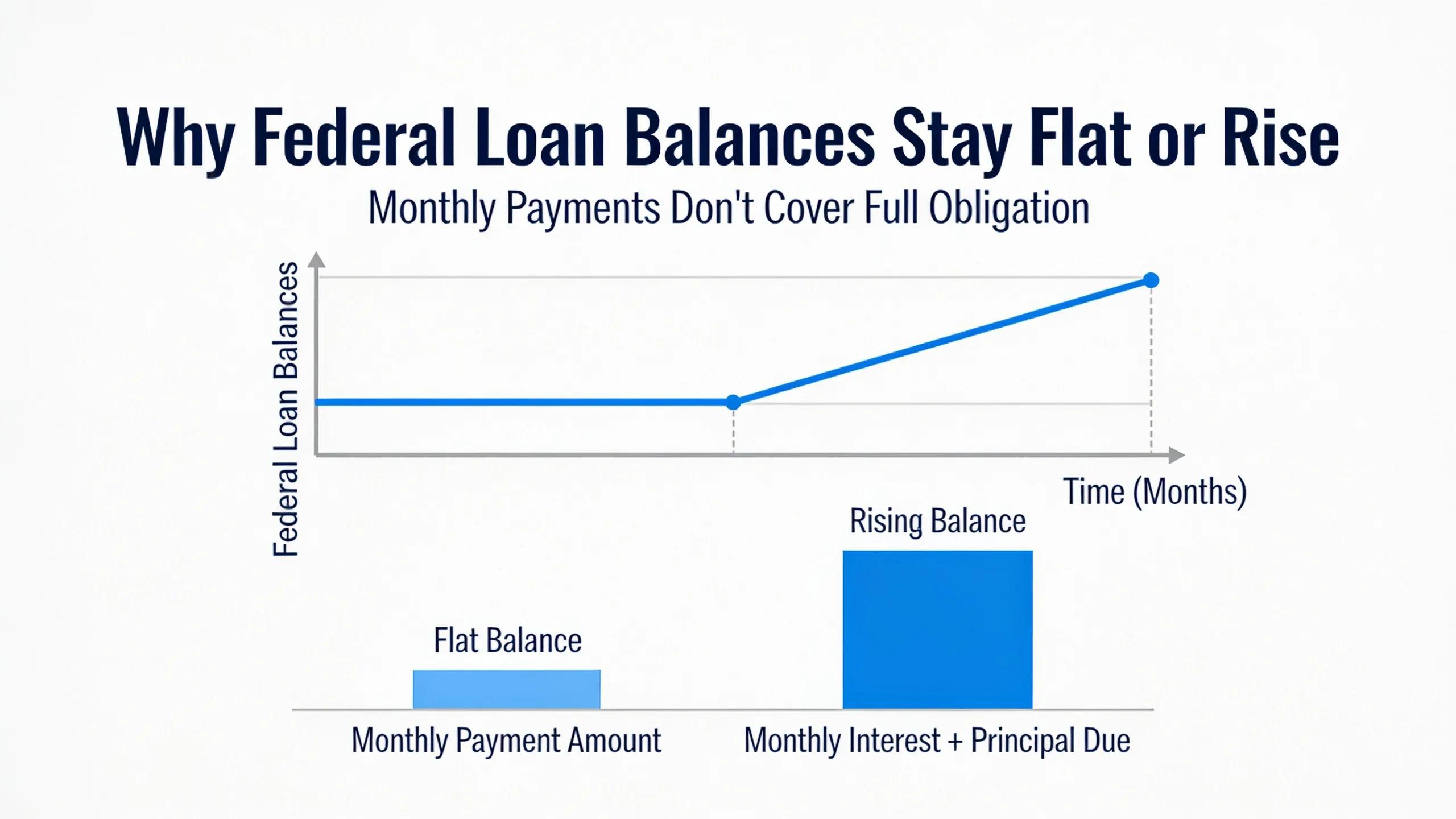
Stagnant balances typically result from interest accrual outpacing monthly payments, a common issue under income-based repayment plans where required payments sometimes fall below accruing interest. Forbearance and deferment periods compound this, since interest continues building even when payments pause. FirstStep Solutions helps federal borrowers analyze repayment plans and identify strategies that target principal reduction instead of stalling.
Why Won't Your Student Loan Balance Go Down?
Unpaid interest is a significant factor, but other issues like inadequate payments also contribute to stagnant balances. Monthly payments often fail to cover the interest accrued that month. The leftover amount rolls onto the principal instead of shrinking it. Borrowers watching their statements month after month can feel like they're losing ground even while paying on time. In a real sense, they are.
Every federal or private student loan works the same basic way: borrowers agree to repay what they borrowed plus interest charged over the life of the loan. That interest isn't fixed for everyone. Rates vary depending on the loan type and whether the loan carries a fixed or variable rate, which changes how fast unpaid interest can pile up.
Is it normal for a federal loan balance to stay apartment for years?
Yes, especially under certain federal repayment structures. Student loan interest accrual can outpace what a low monthly payment covers, leaving the balance unchanged or slowly climbing.
Why does the federal loan system make this so hard to track?
Multiple repayment plans, forgiveness programs, and annual recertification rules create a maze. Borrowers juggling changing regulations often lose sight of how the application of student loan payments affects their actual progress.

How Are Your Payments Actually Applied?
Loan servicers decide the order in which a payment covers fees, interest, and principal. And that order explains how student loan payments are applied. Most servicers subtract any late fees first, then apply the remainder to accrued interest before a single dollar touches the principal balance. Borrowers rarely see this breakdown unless they dig into their monthly statement, which is exactly why the balance can feel frozen.
Why does my balance grow during forbearance?
Forbearance and deferment pause required payments, but interest usually keeps accruing in the background. When the pause ends, that unpaid interest often capitalizes, meaning it gets added to the principal. The result is a larger balance than the borrower started with, even without missing a scheduled due date.
What happens if payments stop altogether?
Continued missed payments eventually push a federal loan into default, triggering credit damage and collection action. That risk makes understanding payment allocation more urgent, not less.
Choosing among competing repayment plans adds another layer of risk. With multiple options, shifting regulations, and detailed eligibility rules, the wrong plan can add thousands of dollars in cost and stretch repayment far longer than necessary. A full review of federal loan details, income, household size, and payment history should precede any recommendation aimed at lowering long-term costs.

Is a Growing Balance Always a Bad Sign?
Not necessarily. For borrowers pursuing loan forgiveness through an income-driven repayment plan, a rising balance can be an expected part of the strategy rather than a warning sign. The goal in these cases isn't always to pay down the balance as fast as possible — it's to minimize the total amount paid out of pocket over the life of the loan.
A very low income-driven payment may not cover the interest accruing each month, allowing the balance to climb for years. But if that payment plan leads to forgiveness at the end of its term, the borrower could see tens or even hundreds of thousands of dollars in remaining debt forgiven. In that scenario, a growing balance isn't a failure of the repayment plan — it's a byproduct of a plan working as designed.
This is why borrowers shouldn't judge their progress by balance movement alone. What matters more is the overall projected cost of each repayment path and the realistic forgiveness potential at the end of it. FirstStep Solutions can review a borrower's complete loan and income picture to determine which repayment and forgiveness options they may qualify for, so the decision to let a balance grow — or to pay it down faster — is made deliberately, not by accident.
Is a Growing Balance Always a Bad Sign?
Not necessarily. For borrowers pursuing loan forgiveness through an income-driven repayment plan, a rising balance can be an expected part of the strategy rather than a warning sign. The goal in these cases isn't always to pay down the balance as fast as possible — it's to minimize the total amount paid out of pocket over the life of the loan.
A very low income-driven payment may not cover the interest accruing each month, allowing the balance to climb for years. But if that payment plan leads to forgiveness at the end of its term, the borrower could see tens or even hundreds of thousands of dollars in remaining debt forgiven. In that scenario, a growing balance isn't a failure of the repayment plan — it's a byproduct of a plan working as designed.
This is why borrowers shouldn't judge their progress by balance movement alone. What matters more is the overall projected cost of each repayment path and the realistic forgiveness potential at the end of it. FirstStep Solutions can review a borrower's complete loan and income picture to determine which repayment and forgiveness options they may qualify for, so the decision to let a balance grow — or to pay it down faster — is made deliberately, not by accident.
What's Next If Your Balance Won't Drop?
Professional guidance replaces guesswork when a student loan balance not going down keeps frustrating monthly progress. FirstStep Solutions specializes in helping borrowers navigate the complexities of repayment, consolidation, and forgiveness programs instead of leaving them to piece together answers alone. Federal loan rules shift often, and one missed detail can mean years of wasted payments.
How does FirstStep Solutions figure out why is my student loan balance not decreasing?
The process starts by understanding a borrower's goals and reviewing the complete student loan picture. Balances, interest rates, payment history, and enrollment status. That review often reveals why aren't my student loan payments reducing the balance in the first place.
What happens after the review?
Once the full situation is clear, the team offers expert guidance on forgiveness programs designed to lower monthly costs and uncover potential savings. FirstStep Solutions blends financial advisory experience with specialized knowledge of federal loan programs, helping borrowers choose a path with genuine confidence.
Support doesn't stop at strategy selection. The team also helps put the chosen plan into action. Stays engaged with ongoing support afterward, keeping borrowers on track. That combination — diagnosis, strategy, and follow-through — forms the firm's primary conversion path for turning a stuck balance into real progress:
Review complete loan details and goals
Identify forgiveness or repayment options
Implement the selected strategy
Provide continued support and monitoring
Conclusion
In closing, a stagnant student loan balance often signals a deeper structural issue—whether inadequate payments, accruing interest, or misaligned repayment strategies—that demands strategic attention rather than resignation. At FirstStep Solutions, we believe you deserve clarity about why your debt isn't declining and concrete pathways forward. Our team helps borrowers decode their loan mechanics, explore alternative repayment plans, and identify forgiveness opportunities tailored to their circumstances. Taking control of your student loan future starts with understanding the full picture—and we're here to guide you through it.